Attenborough, Broadcasting and a Cultural Legacy
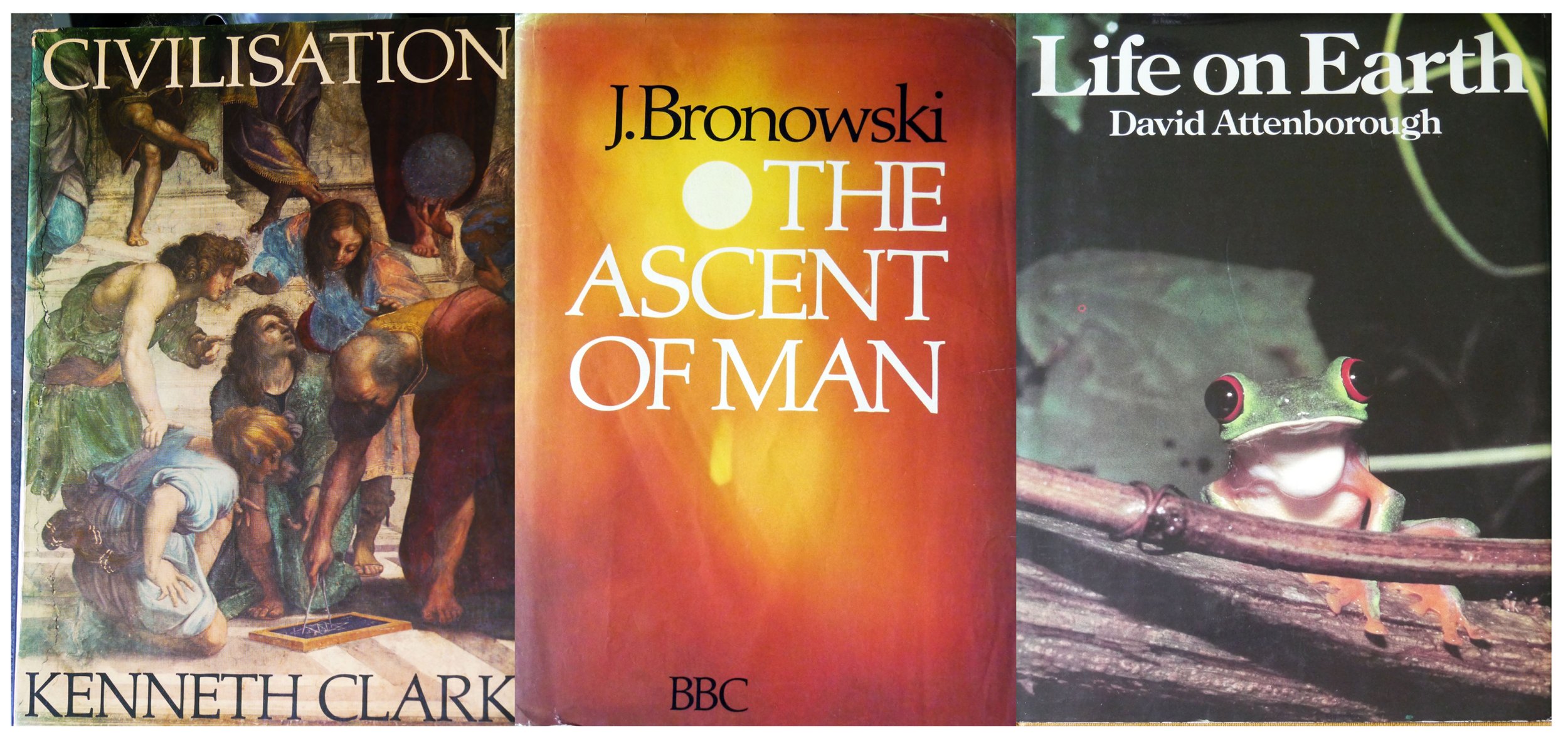
The BBC commissioned these TV series that followed each other consecutively: 1. Civilisation, Kenneth Clark (1969); 2. The Ascent of Man, Jacob Bronowski (1973) were commissioned by David Attenborough; 3. Life on Earth was presented by David Attenborough (1979)
Last week I got to see several programmes broadcast on the BBC to celebrate David Attenborough’s 100th Birthday Anniversary and was lucky enough to tune in to see the live broadcast on the 8th of May from The Royal Albert Hall. As a child growing up during the 1960s and 70s in Rochdale, television, together with our annual holiday, were the only windows on the world outside that of industrial Manchester. At that time, my father’s travel overseas had been at His Majesty’s expense as a conscripted soldier in the Royal Corps of Signals where he visited India and had been stationed in Rawalpindi during the majority of the Second World War. Later, he visited Dresden at the end of the war, again at His Majesty’s expense. Of his war experiences, like many others, he spoke little, but I do remember one story where he introduced me to the Zoroastrian practice of Sky Burials where human corpses were allowed to decompose and were left as carrion to be consumed by vultures. Whether he had witnessed the practice firsthand, or had just heard about it was unclear, but it must have made a deep impression on me. Clearly, things are done very differently in other parts of the world. So, Zoo Quest and similar programmes like The World About Us, also presented by David Attenborough, that mixed natural history with an anthropological theme all became staple viewing.
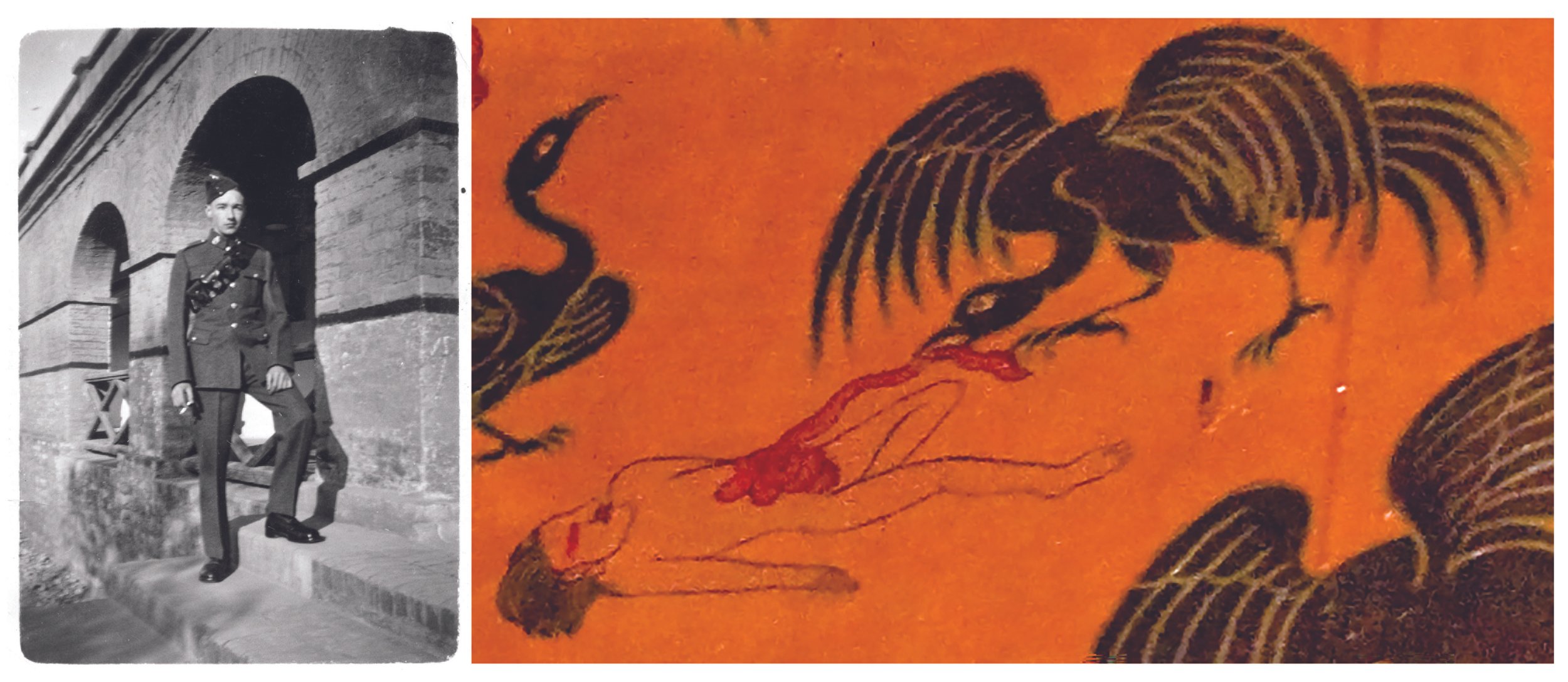
My father Harold Davies (1918 - 1977) in Military Dress Uniform taken in Rawalpindi in 1940 (left) with detail (right) of high altitude sky burial art feeding on deceased by carrion feeding vultures (acknowledgement Wikimedia commons).
I had also seen David as a panel member on the classical music quiz Face the Music, and indeed, perhaps it should have come as no surprise, he was also a collector of world music. And this perhaps is where his genius lay. He brought together the natural world, both its natural history and human sociology, with a musical backdrop that added a sense of place that continues right up to the present time. David clearly has eclectic tastes and what would today in academia be labelled as transdisciplinary came naturally to him. During the late 1960’s and early 70’s David was a commissioner of programmes for the BBC and in 1967 colour TV had just started to be broadcast on a regular basis. I of course, as might be expected, was clamouring to my parents for a colour TV. But an amusing story comes out in his book, Life on Air:
BBC2 needed a special symbol to indicate to those viewing in monochrome when we were transmitting in colour. I asked Presentation Department for suggestions. One of the brightest of our produces, Richard Drewett, came to see me. ‘I have an idea,’ he said. ‘We could get Picasso to do the visual, perhaps an image being drawn on glass or something like that, and Stravinsky to provide the musical sting. ‘I thought he was joking but he insisted that he knew a way to reach Picasso…
A week or so later, Richard was back. Picasso was interested.
‘What about his fee,’ I asked cautiously.
‘Apparently he suggested a colour television set.’
‘But France does not have colour television yet,’ I said.
Richard laughed. ‘That,’ he said ‘is apparently what appeals to him about it. But he will only do it, if Stravinsky also agrees.’
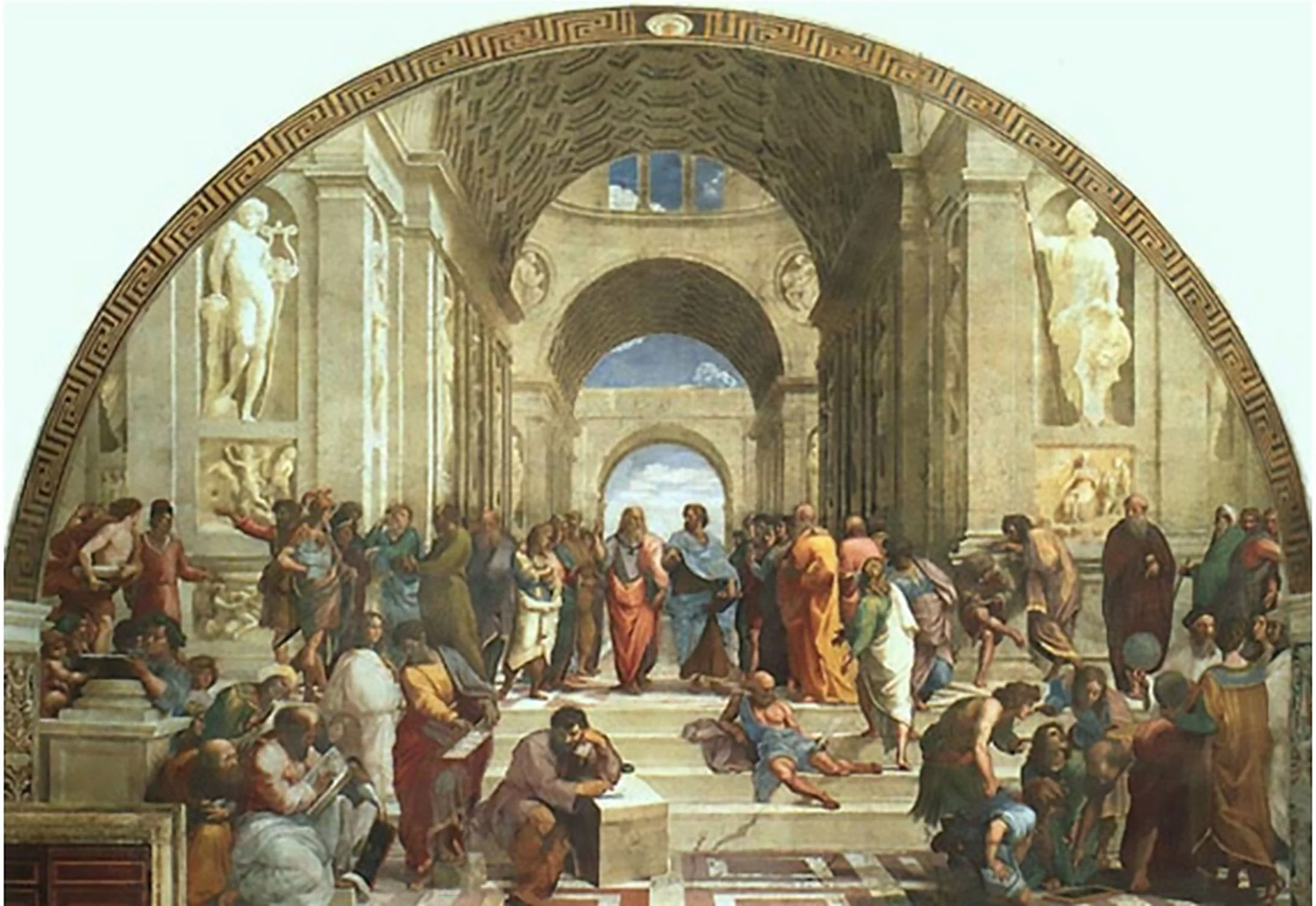
The cover of Kenneth Clark’s book Civilisation shows a detail from Raphael’s fresco The School of Athens in which at the bottom right a group of young men are drawing diagrams using compasses
This friendly but highly competitive approach was transdisciplinary, bringing together the coloured moving image with sound, spoken and/or instrumental, was a powerful tool for conveying not just an intellectual message but also an emotional message. It turned an informative documentary series into a blockbuster. Like in many a film it’s the musical backdrop that emotionally colours the message. I see this beginning with David commissioning Kenneth Clark’s series Civilisation followed by Bronowski’s Ascent of Man. However, this was not without controversy, a fact that reflects CP Snow’s Two Cultures debate about the intellectual split between art and science. Apparently, Aubrey Singer, Head of Science Programmes at the time came to see David outraged that how could David, as a man of science, have selected an arts subject for broadcasting first. As David recounts in his Life on Air, ‘By now I knew that we should be preparing for a successor and I promised Aubrey immediately that the next such series would be a scientific one. Aubrey knew exactly who should be selected to do it. Dr Jacob Bronowski.’ The Ascent of Man first broadcast in 1973 was a persuading impulse that pushed me towards the sciences and indeed towards biology.
Interestingly, as TheAscent of Man had influenced my choice of degree, so too did the next blockbuster, Life on Earth, first broadcast in January 1979, the year of my graduation and this time David was the presenter. It also influenced my career path. I had undertaken a sandwich degree at the then Hatfield Polytechnic during which my third year, the filling in the sandwich, was spent out in “industry”. I had two six month “industrial” placements; one at The Institute of Terrestrial Ecology at Penicuik just outside Edinburgh, looking at the role of mycorrhizal fungi on the establishment of birch trees in polluted soils, and the second at Ciba Geigy Agrochemicals at Whittlesford just outside Cambridge doing herbicide field trials. It was my experience at the Institute of Ecology that led to my being offered a PhD at Birmingham University, but I couldn’t quite believe it when on the telephone I heard myself rejecting the position. Why on earth would I do that?
The answer I found out last week when after listening to David’s 100th Birthday Anniversary from the Royal Albert Hall. I dug out my old copy of Life on Earth the book that accompanied the TV series, and read his introduction in which he says:
Twenty-five years ago, I went to the tropics for the first time. I still recall, with great clarity, the shock of stepping out of the plan and into the muggy, perfumed air of West Africa. It was like stepping into a steam laundry.
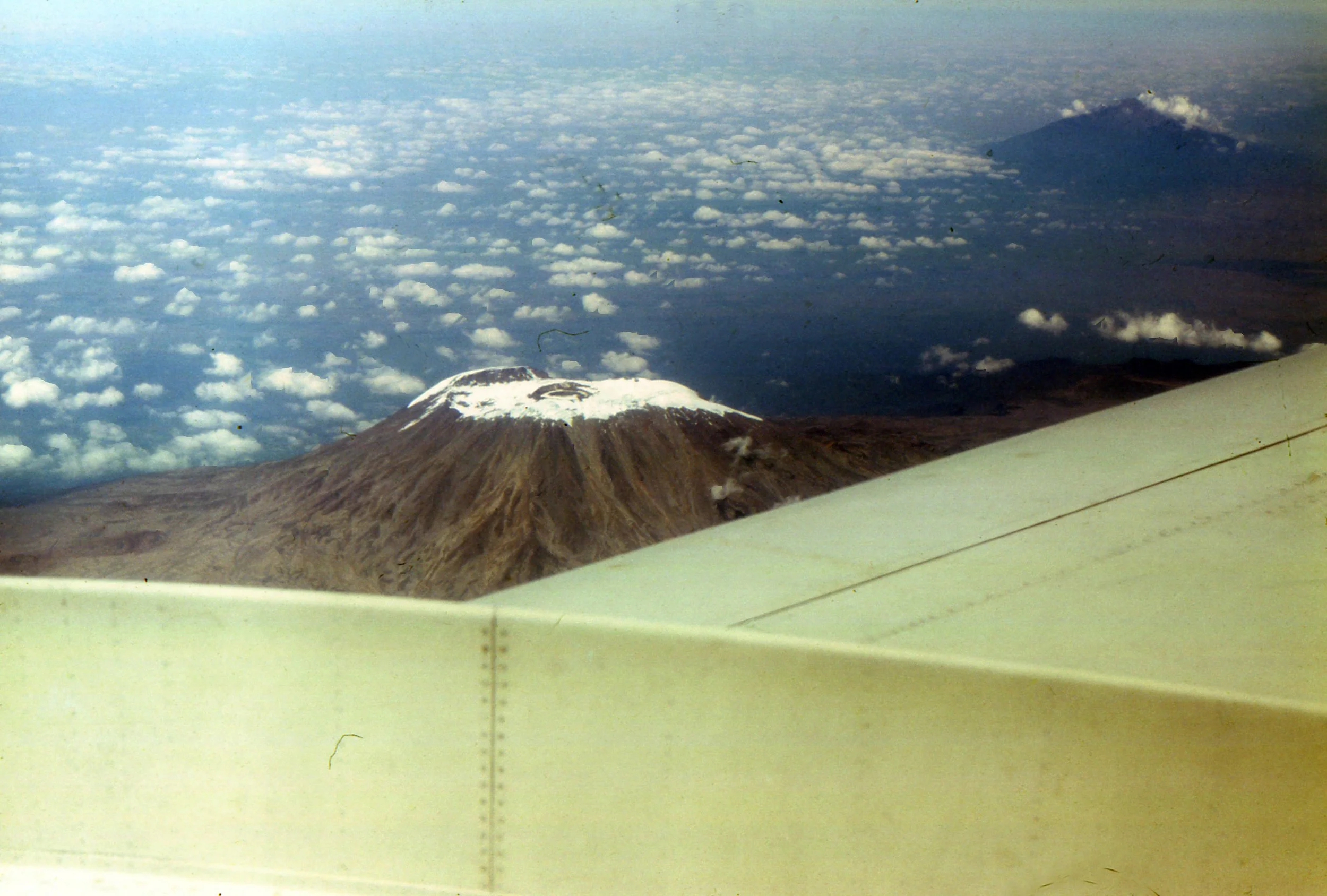
Photograph of Kilimanjaro on 21st September 1979 from a starboard window on course for Dar-es-Salaam and then Blantyre, Malawi
On the morning of 21st September 1979 following the broadcast of Life on Earth earlier that year, I was on a plan heading out to Malawi, to the tropics for the first time. I had looked out of a starboard side window and saw Kilimanjaro as we flew passed (see above) and then on to Dar-es-Salaam International Airport where we had a short stop. I needed to stretch my legs and get some fresh air, so I decided to descent the steps off the plane and make the short walk to the small, dilapidated clubhouse-like airport building. I recorded in my diary later, “Few drops of rain but got out of the plane for a walk about and the heat struck. Tropical Africa had struck.” As I walked out of that plane door, it was like hitting a concrete wall of heat and Attenborough’s words of stepping into a “steam laundry” describes it perfectly. This was why I had rejected the PhD position and opted, at Her Majesty’s expense, to do Voluntary Service Overseas. I wanted to explore the world about me, experience a different climate and culture.
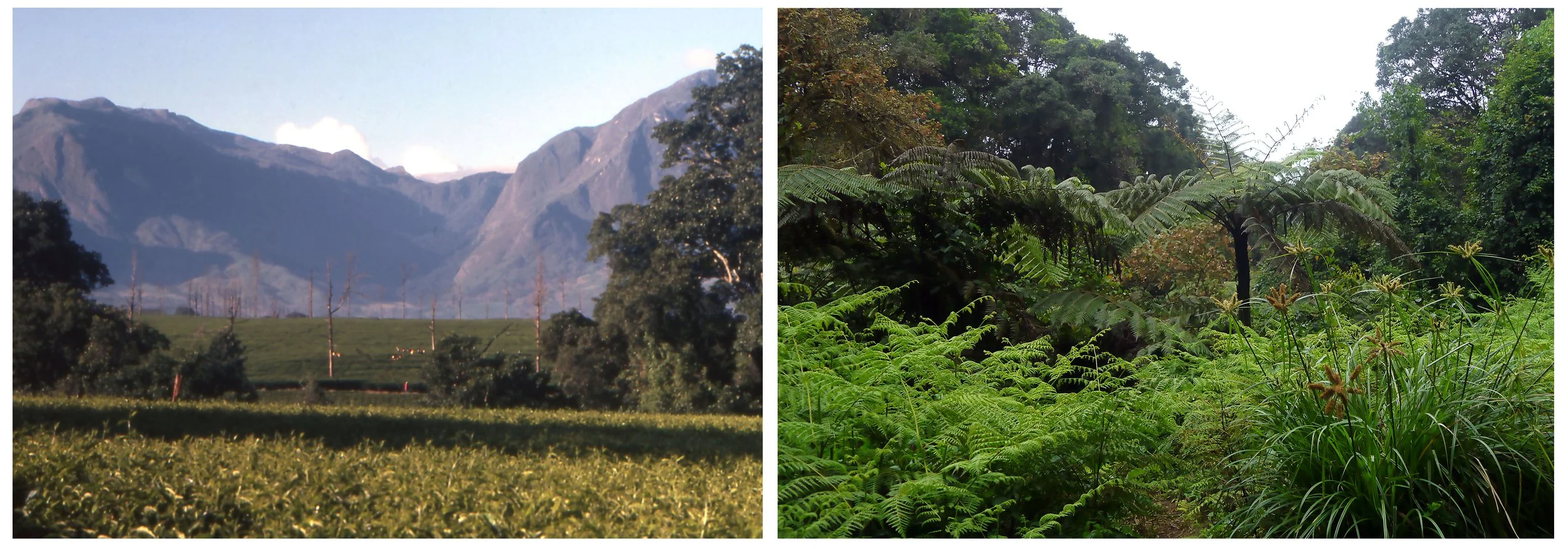
Mulanje Mountain from Thyolo tea estate (left) Tree Ferns (right) which grow both on Mulanje Mountain and Kilimanjaro
As I currently flick through the pages of Life on Earth in the chapter entitled The First Forests there is a picture entitled, Tree ferns, Malawi. I would not have credited it that within a month of arriving in Malawi I would have ascended to the plateau on Mount Mulanje and be a witness to those same, or related, tree ferns. A couple of years ago I wrote to David about the making of the Ascent of Man and the recollection I had about what Bronowski had said about Dmitri Mendeleev (see Blog: Periodic Table, Passion and Progress). He graciously wrote back despite the fact, to my shame, that I had not included a stamped address envelope. What a gentleman, thank you Sir David.